Saturday, 6 July 2024

Sunday Reading - The life and trials of Socrates


This blog is part of the task on Sunday Reading - "The life and trails of Socrates". "The life and trails of Socrates" topic was given by professor Dr. Dilip Barad and for the reference of the task detail reading click here. Certainly, here's a unique and intriguing answer so, this blog deals with some of the answers to questions.

Socrates was an ancient Greek philosopher who lived in Athens from around 470 to 399 BC. He's often considered the founder of Western philosophy and one of the earliest thinkers to focus on ethics. Unlike many other philosophers, Socrates didn't write down his ideas. Instead, we know about him through the writings of his students, such as Plato and Xenophon. They recorded dialogues where Socrates discussed ideas through questions and answers, creating a style known as Socratic dialogue.

These writings present different views on Socrates' beliefs, which makes it hard to know his exact philosophy—a challenge often referred to as the "Socratic problem." In Athens, Socrates was a controversial figure. In 399 BC, he was accused of disrespecting the gods and negatively influencing young people. He was found guilty after a brief trial and chose to die rather than escape from prison, where he was held until his execution.


This video discussing the life of Socrates starts with his famous saying, "Crito, I owe the sacrifice of a rooster to Asklepios." The video explains how Socrates, originally a soldier, became a philosopher. The Oracle of Delphi once declared Socrates the wisest man in the world. When Socrates heard this, he started questioning people about what they knew, which led to the development of the Socratic Method. His quote, "The unexamined life is not worth living," reveals much about his character and knowledge. His disputes with the Thirty Tyrants show that he was unafraid of anything and ready to give his life for the truth. His death also remains a significant episode, as he viewed life as a disease and welcomed death. He believed only fools fear death. An anecdote about a beauty competition highlights his unique way of thinking, which changed the whole concept of beauty by questioning it. Cicero's view that "Socrates was the first to call philosophy down from the heavens" also emphasizes Socrates' impact.


This video uses a different technique, with Socrates himself narrating his story from jail. He shares his background and teachings, emphasizing skepticism don't believe something just because it's told to you. Always ask questions to learn more or find the truth. The video uses two metaphors: the tree and the stone. A stone is static, while a tree grows, symbolizing that one must ask questions to grow. Socrates questions the meanings of virtue and love, arguing that repeating words without understanding their meaning is pointless. The video references Plato, Aristotle, Alexander the Great, and the Roman Empire to show how Socratic knowledge spread across generations until the Dark Ages, when it stopped spreading. After the Renaissance, people again adopted his methods. The video highlights a favorite quote: "The only true wisdom is in knowing you know nothing."


this video focuses on Plato's book "Apology," which doesn't mean to apologize but to defend. The video provides a detailed analysis of Socrates' last trial, showing a democratic law system where the jury decided the case. Socrates denied being wise, saying he only knew that he knew nothing. He wasn't afraid of death, stating he would continue seeking truth even after death. He viewed death positively, which is rare, and believed it held immense possibilities. He said, "A good man cannot be harmed either in life or in death, and his affairs are not neglected by the gods." In his final moments, he wasn't angry but encouraged people to question those who kill the innocent.


A fourth video from Ted-Ed makes learning fun with animated content. It shows that Socrates didn't debate or give advice; he just asked more questions based on answers he received. In an example, Socrates discusses justice with Euthydemus, drawing out knowledge by asking questions. He likened himself to a midwife, helping others give birth to their ideas through inquiry. Today, his method is used in fields like medical science, astronomy, mathematics, law, and education. His reasoning helps in logical discussions and getting to the root of problems or truths.

Combining all these insights, we see Socrates as more than an eccentric philosopher. He was a soldier, a thinker, and a martyr for truth. His life and teachings continue to inspire and challenge us to question, learn, and grow. Socrates' dedication to questioning and examining life, even in the face of death, underscores the importance of seeking truth and understanding. His method of inquiry remains a powerful tool for learning and critical thinking, reminding us that true wisdom lies in recognizing our own ignorance.

* Conclusion:

From the life and teachings of Socrates, we glean a profound legacy that transcends mere philosophical inquiry. Socrates, through his relentless pursuit of truth and unwavering commitment to questioning conventional wisdom, emerged as a beacon of intellectual courage in ancient Athens. His method, encapsulated in the Socratic dialogue, continues to influence fields ranging from philosophy to law and education. By eschewing written texts in favor of oral debates, Socrates ensured that his ideas were not fixed but evolved through communal discourse, challenging and refining societal norms of his time.

Socrates' trial and subsequent death by hemlock underscore his steadfast belief in the importance of integrity and moral courage. He chose not to flee but accepted the verdict, viewing his execution as a testament to his principles. His famous declaration, "The unexamined life is not worth living," encapsulates his philosophy—an invitation to all humanity to engage critically with their beliefs and actions. In an era fraught with political turmoil and societal change, Socrates' unwavering pursuit of truth remains a timeless example of intellectual integrity and moral steadfastness.

Today, Socrates' influence extends far beyond ancient Greece. His methodological approach to questioning assumptions and seeking deeper understanding resonates in modern academia and beyond. The Socratic Method, with its emphasis on dialogue and inquiry, continues to shape how we approach learning and problem-solving. Socrates' life and teachings serve as a reminder that true wisdom lies not in certainty but in the relentless pursuit of knowledge and the courage to challenge our own beliefs. As we reflect on his legacy, we are prompted to examine our own lives critically, embracing the spirit of inquiry and intellectual humility that defined Socrates' enduring contribution to Western thought and ethics.


                                Thank You.

Thursday, 4 July 2024

How to Deconstruct a Text(Th)


This blog is part of the task on the Thinking Activity - "How to Deconstruct a Text,". The "How to Deconstruct a Text," topic was given by professor Dr. Dilip Barad, and for the reference of the task detail reading click here. Certainly, here's a unique and intriguing answer so, this blog deals with some of the answers to questions.

* Inventor of the theory of deconstruction

The theory of deconstruction invented by Jacques Derrida. Jacques Derrida's concept of deconstruction is a critical approach that seeks to dismantle and understand the complexities of texts and their meanings. Originating from his works in the late 1960s, deconstruction challenges traditional assumptions about the ability of language to represent reality. Derrida posited that meaning is always fluid and unstable because it is constructed through the interplay of differences between words, rather than their inherent, fixed definitions. This means that texts do not have a single, univocal meaning but are instead open to multiple interpretations, shaped by various contexts and perspectives.

Deconstruction involves closely reading texts to reveal inherent contradictions and ambiguities, thereby exposing the limitations of conventional interpretations. Derrida argued that every text contains internal conflicts and blind spots that undermine its apparent coherence and authority. By identifying these tensions, deconstruction reveals how texts depend on what they exclude or marginalize to create meaning. This approach challenges the hierarchical oppositions (such as speech/writing, presence/absence, and truth/fiction) that structure traditional thought, demonstrating that these binaries are not natural or given but are constructed and can be deconstructed to uncover new possibilities for understanding.

* How to Deconstruct a Text:


Deconstructing a text according to Jacques Derrida involves several key steps aimed at uncovering its underlying assumptions and contradictions. First, one must identify binary oppositions within the text, such as presence/absence, speech/writing, or reality/appearance. These oppositions are often taken for granted but are crucial for understanding how meaning is constructed.

Next, deconstruction involves destabilizing these oppositions by showing how each term relies on and defines itself against its opposite. This process reveals the inherent instability and fluidity of meaning, as each term's definition is contingent upon what it is not. For example, the concept of "presence" gains its meaning in relation to "absence," and vice versa.

Deconstruction seeks to expose the text's reliance on hierarchical structures and uncover marginalized or suppressed meanings that challenge the dominant interpretation. By highlighting these marginalized aspects, deconstruction opens up new interpretations and perspectives that were previously overlooked or excluded. Derrida's approach to deconstruction encourages a critical engagement with texts that goes beyond surface meanings to reveal the complexities and contradictions inherent in language and thought.

As per the task instruction, I am going to discuss 3 poems:
  • poem 1 'On a Station in the Metro':

The apparition of these faces in the crowd: 
Petals on a wet, black bough. 
                                          (Pound)

Analysis

To deconstruct Ezra Pound's brief poem "In a Station of the Metro," we begin by examining the binary oppositions and underlying assumptions present in the text. The poem juxtaposes the imagery of human faces with petals on a wet, black bough, creating a stark contrast between the human and the natural, the living and the non-living. These binaries highlight the delicate, transient beauty of both the faces and the petals, suggesting a deeper connection between them.

Next, we destabilize these oppositions by exploring how each element relies on the other to convey meaning. The faces in the crowd are given a poetic, almost ethereal quality by being compared to petals, which are typically associated with fragility and beauty. Conversely, the image of petals gains a sense of vitality and presence by being linked to human faces. This interdependence blurs the lines between the human and natural worlds, suggesting that the distinctions between them are not as clear-cut as they initially appear.

We examine the poem's reliance on these images to convey its meaning and uncover any marginalized or suppressed aspects. The brevity and simplicity of the poem invite readers to fill in the gaps with their interpretations, highlighting the fluidity and openness of meaning. The wet, black bough, while seemingly a background element, plays a crucial role in framing the petals, emphasizing the transient nature of beauty and existence. By focusing on this marginalized element, we can see how the poem's meaning extends beyond the immediate comparison of faces and petals, inviting reflections on the fleeting nature of life and the interconnectedness of all things. This deconstruction opens up new interpretations and reveals the poem's deeper complexities.

  • Poem 2 'The Red Wheelbarrow':


So much depends
upon
a red wheel 
barrow
glazed with rain
water
beside the white
     chickens
                                     (Williams and MacGowan)

Analysis

To deconstruct William Carlos Williams' poem "The Red Wheelbarrow," we start by examining its structure and the relationships between its elements. The poem presents a simple yet vivid image of a red wheelbarrow, rainwater, and white chickens. The first line, "so much depends upon," creates a sense of significance and reliance, inviting the reader to ponder why these seemingly mundane objects are so crucial.

The binary oppositions within the poem, such as man-made versus natural (the wheelbarrow versus rainwater and chickens) and color contrasts (red versus white), highlight the interdependence between human activity and nature. The red wheelbarrow, a symbol of labor and utility, stands in contrast to the organic presence of rainwater and chickens. This juxtaposition emphasizes how human tools and natural elements coexist and rely on each other, suggesting that the beauty and functionality of everyday objects are deeply interconnected with the natural world.

By destabilizing these oppositions, we see that the wheelbarrow's significance is amplified by its interaction with the natural elements around it. The rainwater "glazing" the wheelbarrow adds a layer of beauty and freshness, transforming it from a mere tool to an integral part of a serene, harmonious scene. The white chickens further enhance this image, adding life and contrast to the composition. The simplicity and directness of the poem, along with its careful attention to detail, encourage readers to find profound meaning in the ordinary, thereby challenging conventional notions of importance and value. By focusing on these elements and their interrelations, deconstruction reveals the poem's deeper complexities and the poet's intent to elevate everyday objects to a level of poetic significance.

  • Poem 3 'Sonnet 18':


Shall I compare thee to a summer’s day?
Thou art more lovely and more temperate:
Rough winds do shake the darling buds of May,
And summer’s lease hath all too short a date;
Sometime too hot the eye of heaven shines,
And often is his gold complexion dimm'd;
And every fair from fair sometime declines,
By chance or nature’s changing course untrimm'd;
But thy eternal summer shall not fade,
Nor lose possession of that fair thou ow’st;
Nor shall death brag thou wander’st in his shade,
When in eternal lines to time thou grow’st: 
So long as men can breathe or eyes can see, 
So long lives this, and this gives life to thee.
                                                       (Shakespeare)

Analysis

William Shakespeare's Sonnet 18, often referred to as "Shall I compare thee to a summer’s day?," is a classic example of a Petrarchan sonnet that explores the themes of beauty, time, and immortality. The poem begins with a rhetorical question, contemplating whether the beloved should be compared to a summer's day. This sets up a comparison that runs throughout the sonnet, where the beloved's beauty is found to surpass the transient and sometimes harsh qualities of summer.

The poem proceeds to contrast the fickleness of summer, marked by "rough winds" and the brevity of its "lease," with the enduring beauty of the beloved. Shakespeare illustrates the imperfections of nature how the sun can be too hot or its "gold complexion dimm'd," and how everything beautiful eventually fades or declines. These natural cycles of decay and change contrast with the promise of the beloved's eternal summer, which will never fade or lose its beauty.

The volta, or turn, occurs in the ninth line, where Shakespeare shifts from describing the beloved's beauty to asserting its eternal nature. The beloved's beauty is preserved not through physical means but through the poet's verse, described as "eternal lines." These lines promise to defy time and death, ensuring that the beloved's beauty will live on as long as there are people to read and appreciate the poem. This assertion transforms the poem from a contemplation on beauty into a declaration of the power of poetry itself to grant immortality to its subject.

Sonnet 18 celebrates the timeless quality of art and the enduring power of love and beauty. It encapsulates Shakespeare's belief in the transcendent nature of poetry as a means to preserve and immortalize human experiences and emotions across generations.

* Conclusion

So at the end, the concept of deconstruction, pioneered by Jacques Derrida, challenges traditional notions of fixed meaning in texts. Derrida's approach reveals that meaning is fluid and constructed through the interplay of opposing concepts like presence/absence and truth/fiction. By uncovering these tensions and contradictions within texts, deconstruction exposes the limitations of conventional interpretations and opens up new avenues for understanding.

Applying this approach to three poems Ezra Pound's "In a Station of the Metro," William Carlos Williams' "The Red Wheelbarrow," and Shakespeare's Sonnet 18 we see how deconstruction illuminates deeper layers of meaning. In Pound's poem, the juxtaposition of human faces and petals blurs distinctions between the natural and human worlds, challenging our perceptions of beauty and transience. Williams' poem similarly explores the interdependence of human and natural elements, highlighting the significance of everyday objects through their interaction with nature. Shakespeare's Sonnet 18 transcends a mere comparison of beauty by asserting the eternal power of poetry to preserve and immortalize love beyond the limitations of time and mortality.

Thus, deconstruction not only enriches our interpretation of texts by revealing hidden complexities and alternative perspectives but also underscores the enduring relevance of literature in shaping human understanding and experience across cultures and time periods.

* Citations:

Barad, Dilip. “Deconstructive Analysis of Ezra Pound's 'In a Station of the Metro' and
William Carlos Williams's 'The Red Wheelbarrow.'” no. July 2024, 2024, p. 6,
_Wheelbarrow'. Accessed 3 July 2024.

Pound, Ezra. “In a Station of the Metro by Ezra Pound | Poetry Magazine.” Poetry
Foundation,
etro. Accessed 3 July 2024.

Shakespeare, William. “Sonnet 18: Shall I compare thee to a summer’s….” Poetry
Foundation,
summers-day. Accessed 3 July 2024.

Williams, William Carlos, and Christopher MacGowan. “The Red Wheelbarrow by William
Carlos Williams.” Poetry Foundation,
2024.

Saturday, 29 June 2024

Derrida and Deconstruction(Th)


This blog is part of the task on Thinking Activity - "Derrida and Deconstruction". The "Derrida and Deconstruction" topic was given by professor Dr. Dilip Barad and for the reference of the task detail reading click here. Certainly, here's a unique and intriguing answer so, this blog deals with some of the answers to questions.

* Video 1:


Que 1: Why is it difficult to define Deconstruction?

Ans:

It is difficult to define Deconstruction because it resists fixed meanings and stable definitions, aiming to reveal the inherent instability and contradictions within texts and concepts.

Que 2: Is Deconstruction a negative term? 

Ans:

as per my view, No, Deconstruction is not inherently a negative term; it is an analytical approach that seeks to uncover and challenge underlying assumptions and contradictions in texts and concepts.

Que 3: How does Deconstruction happen on its own? 

Ans:

Deconstruction happens on its own because the conditions that create meaning also contain inherent contradictions that, when analyzed, reveal the instability and limitations of those meanings.

* Video 2:


Que 4: The influence of Heidegger on Derrida

Ans:

Heidegger influenced Derrida by inspiring his concepts of "Destruktion" and "Abbau," leading Derrida to develop Deconstruction as a method to analyze and dismantle foundational concepts in Western metaphysics.

Que 5: Derridean rethinking of the foundations of Western philosophy 

Ans:

Derridean rethinking of the foundations of Western philosophy involves questioning and deconstructing binary oppositions and revealing the inherent instability and contradictions within foundational concepts.

* Video 3:


Que 6: Ferdinand de Saussureian concept of language (that meaning is arbitrary, relational, constitutive) 

Ans:

Saussure's concept of language posits that meaning is arbitrary (signs are not inherently connected to what they signify), relational (meaning arises from differences between signs), and constitutive (language shapes our understanding of reality).

Que 7: 
How Derrida deconstructs the idea of arbitrariness? 

Ans:

Derrida deconstructs the idea of arbitrariness by showing that while signs are arbitrary in their relationship to what they signify, their meanings are contingent and interconnected through a web of differential relations, challenging the stability of any fixed or absolute meaning.

Que 8: Concept of metaphysics of presence

Ans:

Metaphysics of presence refers to the philosophical emphasis on the immediate presence and certainty of things, contrasting with Derrida's critique that meaning is often deferred, elusive, and never fully present or stable.

* Video 4:


Que 9:
Derridean concept of DifferAnce 

Ans:

Derrida's concept of "différance" combines the ideas of difference and deferral, highlighting how meaning is both differentiated and deferred through language, challenging traditional notions of fixed and immediate meaning.

Que 10: Infinite play of meaning 

Ans:

The infinite play of meaning refers to the continuous and never-ending process of signification where meanings are fluid, interconnected, and constantly shifting, without a fixed or final interpretation.

Que 11: DIfferAnce = to differ + to defer 

Ans:

"Différance" combines "to differ" (difference) and "to defer" (deferral), capturing the dual movement of differentiation and postponement inherent in the process of signification and meaning-making.

* Video 5:

Que 12: Structure, Sign and Play in the Discourse of the Human Sciences 

Ans:

"Structure, Sign, and Play in the Discourse of the Human Sciences" is an essay by Jacques Derrida that critiques structuralism and discusses the instability of meaning and the play of signs within various fields of knowledge.

Que 13: Explain: "Language bears within itself the necessity of its own critique." 

Ans:

"Language bears within itself the necessity of its own critique" means that any attempt to critique language is limited by language itself, as language structures how critique is formulated and understood, revealing its own complexities and contradictions in the process.

* Video 6:


Que 14: The Yale School: the hub of the practitioners of Deconstruction in the literary theories 

Ans:

The Yale School was pivotal for practicing Deconstruction in literary theory, led by influential scholars who applied Jacques Derrida's concepts to analyze and reinterpret texts.

Que 15: The characteristics of the Yale School of Deconstruction 

Ans:

The Yale School of Deconstruction emphasized:

-Critiquing binary oppositions 
- Questioning aesthetic and formalist approaches 
- Examining rhetoric and language intricacies

* Video 7:


Que 16: How other schools like New Historicism, Cultural Materialism, Feminism, Marxism and Postcolonial theorists used Deconstruction?

Ans: 

Other schools such as New Historicism, Cultural Materialism, Feminism, Marxism, and Postcolonial theorists have used Deconstruction to: 

- New Historicism: 
Challenge historical narratives and power dynamics embedded in texts. 

- Cultural Materialism: 
Analyze how material conditions influence cultural production and meaning.

- Feminism: 
Deconstruct gender roles, identity, and patriarchal structures within literature and culture. 

- Marxism: 
Critique socioeconomic inequalities and ideological constructs in texts. 

- Postcolonial theorists: 
Deconstruct colonial discourse, power relations, and cultural representations in postcolonial contexts.


                                 Thank You.

Monday, 24 June 2024

The Black Cat(Th)


This blog is part of the task on Thinking Activity - "The Black Cat". "The Black Cat" topic was given by Professor Mrs. Devanshi Bhatt. Certainly, here's a unique and intriguing answer.

Introduction:

Edgar Allan Poe's "The Black Cat" is a quintessential example of Gothic literature, a genre Poe masterfully shaped and popularized in the 19th century. First published in 1843, this macabre tale of guilt, madness, and the supernatural has captivated readers with its chilling narrative and psychological depth. In this comprehensive analysis, we will explore the intricate layers of "The Black Cat," delving into its themes, characters, and narrative techniques to uncover the profound insights it offers into the human psyche and the nature of evil.

The Master of Macabre:

Before we delve into the heart of "The Black Cat," it's essential to understand the man behind the story. Edgar Allan Poe, born in 1809 in Boston, Massachusetts, is often regarded as the master of Gothic fiction. His works are characterized by their exploration of the darker aspects of the human condition, including themes of death, madness, and the supernatural. Poe's innovative use of narrative structure, combined with his keen psychological insight, has cemented his legacy as one of the most influential writers in American literature.

"The Black Cat" is one of Poe's most famous short stories, showcasing his ability to create an atmosphere of suspense and terror while delving into the complexities of the human mind. Through its exploration of guilt, alcoholism, and the uncanny, "The Black Cat" remains a powerful and unsettling work that continues to resonate with readers today.

Exploring the Themes:

At its core, "The Black Cat" is a meditation on the duality of human nature and the descent into madness. The story follows an unnamed narrator who recounts his experiences with two black cats, Pluto and an unnamed second cat, and the horrifying consequences of his actions. As the narrator's sanity unravels, Poe delves into themes of guilt, retribution, and the supernatural, creating a narrative that is both psychologically complex and deeply unsettling.

One of the central themes of "The Black Cat" is the idea of guilt and its corrosive effects on the human psyche. The narrator's descent into madness is driven by his inability to reconcile his feelings of guilt and remorse for his violent actions. As he becomes increasingly consumed by his guilt, he begins to project his fears and anxieties onto the black cats, transforming them into symbols of his inner turmoil.

Another key theme in the story is the concept of the uncanny, a term popularized by Sigmund Freud to describe the sense of unease and discomfort that arises when something familiar is rendered strange or unsettling. In "The Black Cat," Poe creates an atmosphere of the uncanny through his use of supernatural elements and the doubling of the two black cats. As the narrator's grip on reality weakens, the boundaries between the natural and the supernatural blur, heightening the sense of terror and unease.

Character Study:

The Narrator: 

The unnamed narrator of "The Black Cat" is a deeply flawed and unreliable character whose descent into madness forms the backbone of the story. Initially portrayed as a kind and gentle man, the narrator's personality undergoes a dramatic transformation as he succumbs to the destructive influence of alcohol. His violent and erratic behavior leads to the horrific abuse of his wife and the two black cats, ultimately resulting in his complete psychological breakdown. Through the narrator's deteriorating mental state, Poe explores the dark side of human nature and the capacity for evil that lies within us all.

Pluto: 

The first black cat, Pluto, serves as a symbol of the narrator's guilt and remorse. Initially loved and cherished by the narrator, Pluto becomes the target of his violent outbursts as his alcoholism takes hold. The brutal killing of Pluto marks the beginning of the narrator's descent into madness, setting off a chain of events that culminates in his ultimate downfall. Pluto's haunting presence throughout the story serves as a constant reminder of the narrator's guilt and the consequences of his actions.

The Second Cat: 

The second black cat, which bears an uncanny resemblance to Pluto, further intensifies the narrator's feelings of guilt and paranoia. Unlike Pluto, this cat has a white patch of fur that gradually takes on the shape of a gallows, symbolizing the narrator's impending doom. The second cat's mysterious appearance and behavior contribute to the story's atmosphere of the uncanny, blurring the line between reality and the supernatural.

The Wife: 

The narrator's wife is a secondary character whose suffering and eventual murder serve to underscore the narrator's descent into madness. Despite her husband's increasingly erratic and violent behavior, she remains a sympathetic and tragic figure, ultimately falling victim to his uncontrollable rage. Her death serves as the climax of the story, sealing the narrator's fate and reinforcing the themes of guilt and retribution.

Brief Study:

"The Black Cat" is notable for its use of first-person narration, which allows readers to experience the narrator's psychological unraveling firsthand. Poe's masterful use of unreliable narration creates a sense of intimacy and immediacy, drawing readers into the narrator's disturbed mind and heightening the story's sense of suspense and horror.

The story's structure is also significant, as it mirrors the narrator's descent into madness. The narrative begins with a sense of calm and rationality, but as the events unfold, the tone becomes increasingly erratic and disjointed, reflecting the narrator's deteriorating mental state. This shift in narrative style effectively conveys the sense of psychological disintegration and heightens the story's impact.

In terms of symbolism, the two black cats play a crucial role in the narrative. Pluto and the second cat serve as manifestations of the narrator's guilt and inner turmoil, their presence a constant reminder of his violent actions and the consequences that follow. The motif of the gallows, represented by the white patch on the second cat, foreshadows the narrator's eventual downfall and reinforces the themes of guilt and retribution.

Conclusion:

In conclusion, Edgar Allan Poe's "The Black Cat" stands as a timeless work of Gothic literature, offering a chilling exploration of guilt, madness, and the supernatural. Through its richly drawn characters, intricate narrative structure, and masterful use of symbolism, the story invites readers to delve into the darkest corners of the human psyche and confront the dualities of human nature. Poe's ability to create an atmosphere of suspense and terror, combined with his keen psychological insight, ensures that "The Black Cat" remains a powerful and unsettling work that continues to captivate and haunt readers.

As we journey through the twisted mind of the narrator and the eerie world of "The Black Cat," we are reminded of the fragility of sanity, the corrosive effects of guilt, and the capacity for evil that lies within us all. Poe's masterful storytelling and exploration of the human condition ensure that "The Black Cat" remains a haunting and thought-provoking work, a testament to the enduring power of Gothic literature and the genius of Edgar Allan Poe.


                                 Thank You.

The God of Small Things(Th)


This blog is part of the task on Thinking Activity - "God of small things". The "God of small things" topic was given by Professor Miss. Seema Rathod. Certainly, here's a unique and intriguing answer.

Introduction:

Arundhati Roy's debut novel, "The God of Small Things," is a literary masterpiece that transcends boundaries of time and space, immersing readers in a vividly depicted world of family, love, and loss. Published in 1997, Roy's novel has earned critical acclaim and a devoted readership for its lyrical prose, intricate storytelling, and profound exploration of social, cultural, and political themes. In this comprehensive analysis, we embark on a journey through the intricate layers of "The God of Small Things," unraveling its characters, themes, and narrative techniques to uncover the timeless truths it offers about the complexities of life and the human experience.

The Author and her Magnum Opus:

Before delving into the heart of "The God of Small Things," it's imperative to understand the enigmatic figure behind the novel. Arundhati Roy, born in 1961 in Shillong, India, emerged as one of India's most celebrated authors, renowned for her fearless activism and groundbreaking literary achievements. As a writer, Roy defies categorization, blending elements of magical realism, social critique, and poetic prose to create a uniquely captivating narrative voice.

"The God of Small Things" catapulted Roy to international fame, earning her the prestigious Booker Prize in 1997 and solidifying her reputation as a literary luminary. Through her evocative storytelling and keen social commentary, Roy invites readers to explore the intricacies of Indian society, culture, and politics with empathy, insight, and nuance.

Exploring the Themes:

At its core, "The God of Small Things" is a poignant meditation on love, loss, and the enduring legacy of colonialism in India. Set in the fictional town of Ayemenem in Kerala, the novel follows the lives of the dysfunctional and tragicomic members of the Syrian Christian Ipe family, whose fate is shaped by a web of secrets, betrayals, and forbidden desires.

Central to the novel's narrative is the theme of forbidden love, embodied in the relationship between fraternal twins Rahel and Estha and their cousin, Sophie Mol. As children, Rahel and Estha experience the exhilarating highs and devastating lows of first love, only to be torn apart by the rigid social hierarchies and oppressive norms that govern their world.

Through Rahel and Estha's story, Roy explores the corrosive effects of societal expectations and the ways in which love and desire can be both liberating and destructive. The twins' struggle to reconcile their feelings with the expectations of family and society serves as a poignant metaphor for the larger forces of oppression and injustice that shape their lives.

Character Study:

Rahel: 

Rahel, one of the novel's central protagonists, is a sensitive and introspective young woman grappling with the traumas of her past and the complexities of her present. Estranged from her family and haunted by memories of loss and betrayal, Rahel navigates the turbulent waters of adulthood with a mixture of vulnerability and resilience. As she reconnects with her twin brother Estha and confronts the ghosts of her past, Rahel undergoes a journey of self-discovery and healing, ultimately finding redemption in the power of love and forgiveness.

Estha: 

Estha, Rahel's twin brother, is a gentle and introspective soul whose innocence is shattered by the traumatic events of his childhood. Silent and withdrawn after being molested by a family acquaintance, Estha grapples with feelings of guilt and shame, struggling to find his voice in a world that seeks to silence him. Through his bond with Rahel and his unspoken connection to the world around him, Estha emerges as a symbol of resilience and hope, a testament to the enduring power of the human spirit in the face of adversity.

Ammu: 

Ammu, Rahel and Estha's mother, is a complex and tragic figure whose life is marked by unfulfilled desires and shattered dreams. Constrained by the oppressive social norms of her time and place, Ammu finds herself trapped in a loveless marriage and a stifling existence, yearning for freedom and autonomy. As she embarks on a passionate affair with Velutha, a lower-caste worker, Ammu defies societal expectations and asserts her right to love and be loved, only to suffer the devastating consequences of her actions.

Velutha: 

Velutha, a lower-caste worker and Ammu's lover, embodies the marginalized and oppressed communities of Kerala, whose voices are silenced and whose lives are devalued by the rigid social hierarchies of Indian society. Despite facing discrimination and injustice at every turn, Velutha remains a steadfast and compassionate presence in the lives of those around him, offering solace and support to Ammu and her family in their darkest hours. Through Velutha's tragic fate, Roy exposes the brutal realities of caste-based oppression and the enduring legacy of colonialism in India.

Brief Study:

Roy's "The God of Small Things" is characterized by its non-linear narrative structure, which weaves together past and present, memory and reality, in a tapestry of interconnected stories. Through Roy's use of flashback and foreshadowing, readers are transported back and forth in time, piecing together the fragments of the Ipe family's tragic history and uncovering the secrets that bind them together.

The novel is also notable for its lyrical prose and vivid imagery, which evoke the sights, sounds, and smells of Kerala with breathtaking clarity and detail. From the lush greenery of the backwaters to the oppressive heat of the monsoon season, Roy's evocative descriptions bring the landscape of Kerala to life, immersing readers in its beauty and brutality.

Conclusion:

In conclusion, Arundhati Roy's "The God of Small Things" stands as a timeless masterpiece of literature, offering a poignant exploration of love, loss, and the enduring legacy of colonialism in India. Through its richly drawn characters, lyrical prose, and non-linear narrative structure, Roy invites readers to delve into the complexities of the human experience with empathy, insight, and nuance. As we journey through


                            Thank You.

Wednesday, 15 May 2024

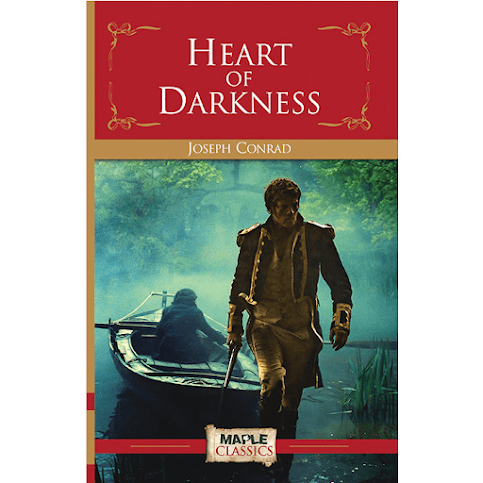
Heart of Darkness(Th)


Title: "Navigating the Depths of Human Darkness: Joseph Conrad's 'Heart of Darkness'"

Introduction:

Joseph Conrad's "Heart of Darkness" stands as a seminal work of literature that continues to captivate readers with its exploration of the human psyche and the darkness that lurks within. First published in 1899, Conrad's novella remains a powerful indictment of European colonialism and a haunting meditation on the complexities of human nature. In this comprehensive analysis, we embark on a journey through the dense jungle of "Heart of Darkness," unraveling its themes, characters, and narrative techniques to uncover the profound insights it offers into the human condition and the depths of moral ambiguity.

The Author Behind the Darkness:

Before delving into the heart of "Heart of Darkness," it's essential to understand the life and legacy of Joseph Conrad. Born Józef Teodor Konrad Korzeniowski in 1857 in what is now Ukraine, Conrad lived a life marked by adventure, hardship, and existential exploration. As a seaman and adventurer, Conrad drew upon his own experiences navigating the treacherous waters of the Congo River to craft the haunting narrative of "Heart of Darkness."

Conrad's work is characterized by its introspective exploration of moral ambiguity and the human capacity for both greatness and depravity. Through his vivid prose and keen psychological insight, Conrad invites readers to confront the darkness that resides within each of us, probing the depths of the human soul with unflinching honesty and compassion.

Exploring the Themes:

At its core, "Heart of Darkness" is a meditation on the dualities of human nature and the darkness that lurks within the human soul. Set against the backdrop of European colonialism in Africa, the novella follows the journey of Charles Marlow, a steamboat captain tasked with venturing into the heart of the Congo to retrieve the enigmatic Kurtz, a revered ivory trader whose descent into madness serves as a mirror for Marlow's own moral reckoning.

Through Marlow's journey up the Congo River, Conrad immerses readers in a world of moral ambiguity and existential uncertainty, where the boundaries between civilization and savagery blur and the veneer of European superiority crumbles. As Marlow encounters the brutality and exploitation of colonialism firsthand, he is forced to confront the darkness that resides within himself and within the hearts of his fellow men.

Central to the novella's narrative is the character of Kurtz, whose descent into madness serves as a cautionary tale about the corrupting influence of power and ambition. As Marlow delves deeper into Kurtz's psyche, he discovers a man consumed by his own desires and driven to madness by the unchecked pursuit of wealth and dominance:
"The horror! The horror!"
Through Kurtz's final words, Conrad captures the existential horror of confronting the darkness within oneself, as well as the moral bankruptcy of European colonialism.

Symbolism and Allegory:

"Heart of Darkness" is renowned for its rich symbolism and allegorical depth, inviting readers to interpret its dense narrative layers through multiple lenses. The Congo River, with its murky depths and impenetrable jungle, serves as a potent symbol of the darkness that lies at the heart of human civilization, as well as the unknown depths of the human psyche.

The character of Kurtz, with his messianic charisma and descent into madness, represents the embodiment of European imperialism and the corrupting influence of power. Through Kurtz's transformation from idealistic crusader to megalomaniacal tyrant, Conrad offers a scathing critique of the hypocrisy and brutality of colonialism, as well as the moral ambiguity of human nature.

Conclusion:

In conclusion, Joseph Conrad's "Heart of Darkness" stands as a timeless masterpiece of literature, offering a searing exploration of the darkness that resides within the human soul and the moral ambiguities of European colonialism. Through its vivid prose, complex characters, and haunting imagery, Conrad invites readers to confront the darkness that lurks within themselves and within the societies they inhabit, probing the depths of human nature with unflinching honesty and compassion.

As we journey through the dense jungle of "Heart of Darkness," we are confronted with the existential questions that lie at the heart of the human experience: What lies at the heart of human darkness? Can we ever truly escape the shadows that lurk within us? Through Conrad's masterful storytelling, we are reminded of the fragility of civilization, the complexity of morality, and the enduring power of literature to illuminate the darkest corners of the human psyche.


                               Thank You.

ThAct: Revolution 2020 - Thematic Study

  This blog is part of the task on Thinking Activity "Revolution 2020". "Revolution 2020" topic was given by professor D...